A clothing company writing about computer history
Which is either the strangest thing about this or the least interesting.
We make clothes about developer culture. A 418. A null byte. A card with holes in it. That only works if you genuinely love the material, and the quickest way to find out whether someone does is to ask them where any of it came from.
So we went and read. Almost none of it is lost. Computing is about eighty years old, which means its founding decisions were made by people who wrote down what they were thinking, in papers and RFCs and memos that are still sitting there. Some of them are still alive to ask. The material is not missing. It is just not read.
These are the ones we wanted to bring to life, and then interpret, because a design is an interpretation and it ought to be built on something true. One subject per piece, taken back to the primary document. Where there is no primary document, which happens more often than you would like, we say so.
Some of them end up on a garment. That is the least interesting thing about them.
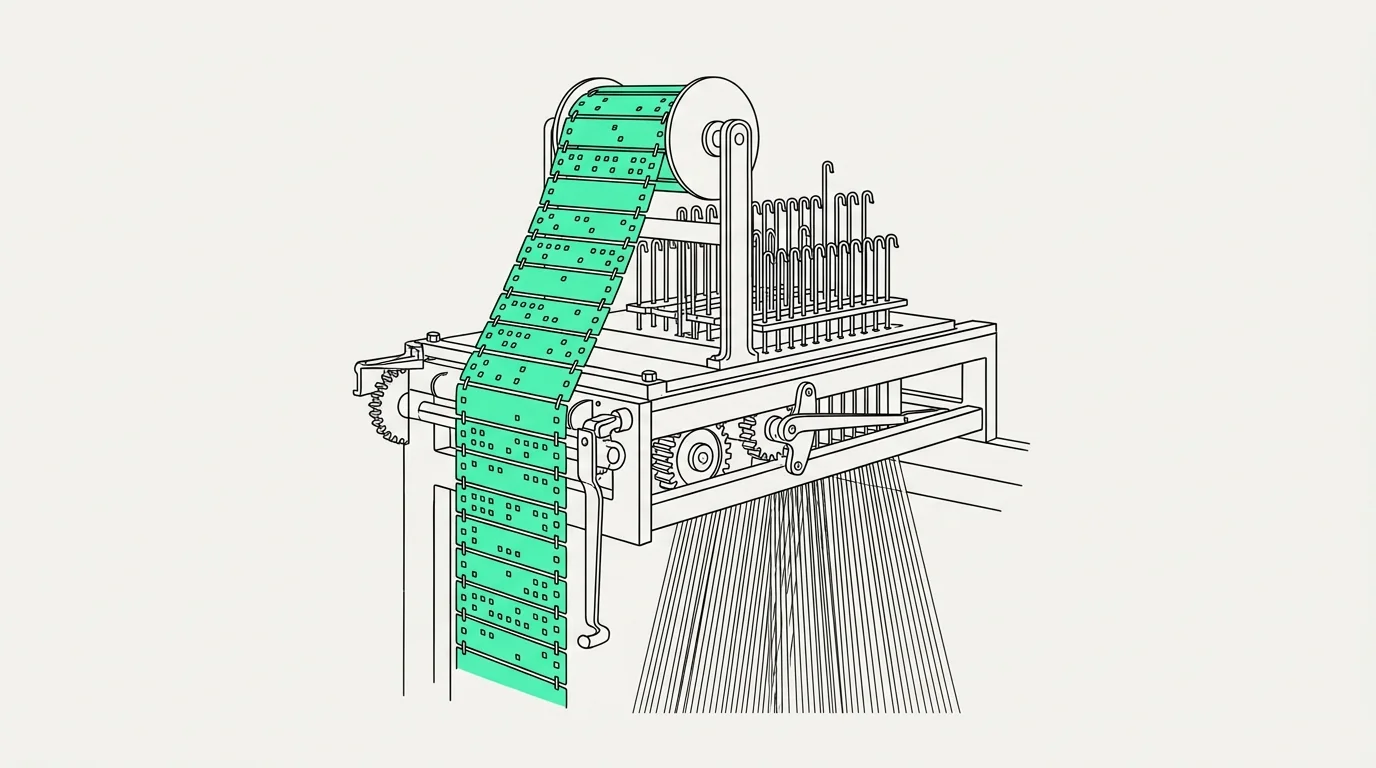
Your laptop is descended from a loom, and it has never got over it
We called the company Binary & Thread because it sounded good. Then we looked into it, and it turns out we were just being accurate, two hundred years late.
The most expensive byte in computing
Somebody decided how computers know where text stops. Nobody wrote it down. We have all been quietly paying the invoice since roughly 1969.
Unless work is done
Everyone reaches for the second law of thermodynamics to explain why code rots. The man who actually measured it looked at that comparison and put it back down.
It was always going to be DNS
Before 1983 the entire internet's list of names was one file, and you got the new version by asking someone to send it to you.
The first smiley had to be excavated
It was posted in 1982, nobody kept a copy, and it took a sponsored dig through twenty-year-old backup tapes to get it back.
Now they have two problems
The most quoted line in software is real, was posted on a Tuesday in 1997, and its author was recycling a joke that was already nine years old.
Nobody invented the stack
At least three people did, separately, without knowing about each other. And the word everybody uses for it was coined later, by a fourth.
The joke that would not die
An April Fools' RFC from 1998 defined a status code for a teapot refusing to make coffee. It has outlived most of the serious protocols published that year.