Your fingers got there first
A developer needed to get through his own game. Forty years later, his shortcut still lives.

You know the sequence. Up, up. Down, down. Left, right. Left, right. B, A. Your fingers may have got there before the sentence did. This is the Konami code. It began the way many enduring pieces of software do, with a developer who needed to get his work done.
In 1986, Konami released the home version of Gradius for the NES, the Famicom in Japan. It is a game about flying a small ship through things that very much want it not to be flying. Kazuhisa Hashimoto worked on it, and there was a practical problem: he could not reliably beat the arcade game he was working from. Testing a difficult game by repeatedly losing at it is a noble commitment to realism. It is also a poor use of an afternoon. So he built the Konami code for that purpose. And he designed it for one very small audience: the person at his desk (and made it easy to remember). Entering the command in Gradius gave the ship a full set of power-ups. Not a magic door to every level. Not a universal promise of extra lives. For someone trying to test a game he could not finish, that is a reasonable request.
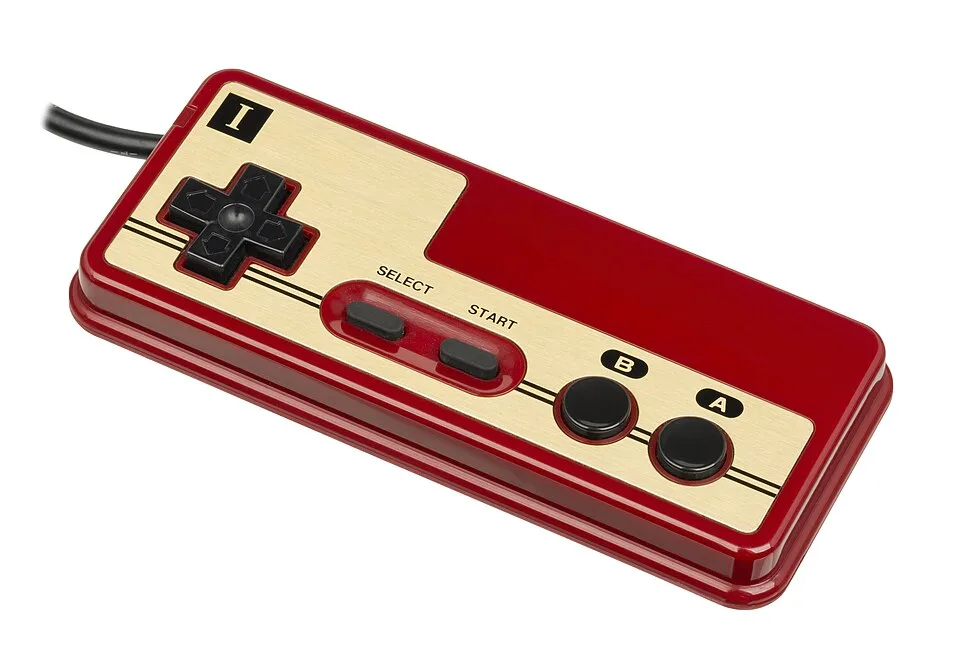
Legend has it that he did, in fact, forget to take the code out. But Hashimoto's account only gives us his reason for putting it in, not a confession that he forgot to take it out. But I think that small, solid story is good enough: a tool built for testing became a cheat code players learned to type, and other developers kept giving those fingers somewhere to go.
The best known of those was Contra, which reached the NES in 1988. It used the same code, and it is the reason some people still call it the Contra code.
And what about the code itself? Up, up. Down, down. Left, right. Left, right. B, A. Four pushes establish a rhythm. The next four makes your finger dance a little. And B, A closes the thing like a signature. When you've done it a couple of times it establishes itself inside you. Sits in the deeper part of the brain somehow. At least I feel it that way.
Often players try the Konami code without a manual, a menu, or even much hope that it will work. Most of the time it does nothing. That is part of the bargain.
I still try the code. On menus, on title screens, on pages that were never going to answer. Sometimes something happens!
The design from this story
A sequence your hands know better than you do is now a T-shirt called "Konami code". No menu required.
Next story by email, in stdout
The field guides go out in the stdout newsletter. One email every two weeks. If there is nothing worth your time, we skip that week and send nothing.
Where this comes from
- secondaryKazuhisa Hashimoto and Shigeharu Umezaki, 2003 conversation, translated by GlitterBerri in 2012He could not beat the arcade game, so he put the code in, and he made it easy to remember because he was the one who would use it. The translation does not have him saying he forgot to remove it.
- primaryKonami, 35th anniversary note, 10 September 2021The home version of Gradius is dated 25 April 1986, the command is the up-up-down-down sequence, and entering it gave the ship a full set of power-ups.
- secondaryArda Ocal, ESPN, 26 February 2020Contra did not reach Nintendo until 1988, it was the game that popularized the code, and people still call it the Contra Code.